
Why People Who Have Been Everywhere Keep Coming Back to Zermatt
There is a certain type of traveller who has stopped being impressed by places. They have seen the best suites, the private islands, the chartered yachts. The destination itself no longer does the work.
Zermatt is one of the few places that still does.
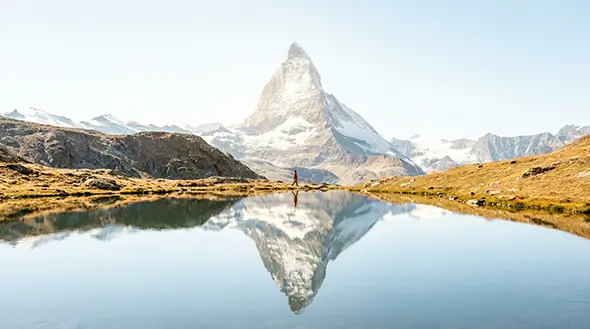
Not because of the Matterhorn — though at sunset from the Gornergrat terrace, it remains genuinely difficult to look away. But because the village is structured, almost accidentally, in a way that serves people who value time above everything else:
-
No cars.
-
Vertical access from the centre.
-
A scale that never overwhelms.
-
And a depth — of terrain, of gastronomy, of calendar — that rewards those who know where to look.
Most visitors see the surface. This is for those who want to know what’s underneath.
The Mountain Before Anyone Else
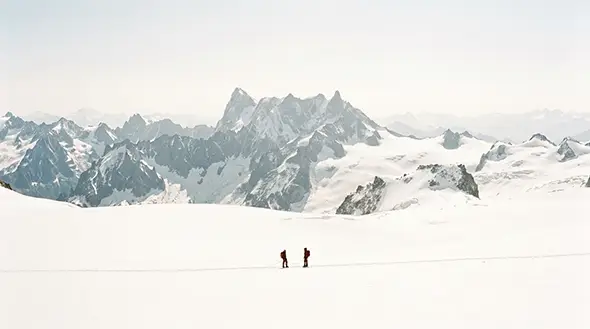
The first cable car to Klein Matterhorn leaves at 7:20. By 7:35 you are standing at 3,883 metres, and the valley below has not yet woken up.
This is where summer in Zermatt begins, for those who understand it. The Matterhorn Glacier Paradise operates the highest summer ski area in Europe — a permanent ice field that allows year-round access regardless of season. In July and August, the glacier in the early morning hours belongs almost entirely to those who chose to be there. Elite racing teams use it for training. The rest is yours.
A private guide changes the nature of this entirely. Instead of navigating the lift schedule and the crowds that arrive mid-morning, you are on the mountain on your own terms — with someone who knows which line to take, where the snow is best, and when to come down. The difference between a cable car ticket and a guided morning on the glacier is the difference between seeing Zermatt and being in it.
For those who want to go higher: the Breithorn stands at 4,164 metres and is widely considered the most accessible four-thousander in the Alps. The cable car eliminates most of the ascent. What remains is a guided crossing of a heavily crevassed glacier and a final snow dome to the summit — a genuine alpine experience that requires crampons, rope, and a qualified mountain guide, but no prior mountaineering career. On a clear morning, the view extends across four countries. It tends to stay with people.
The Calendar: What Summer Actually Offers
Zermatt in summer is not one season. It is a sequence of distinct moments, each with its own character.
July 3–4: Gornergrat Zermatt Marathon
This is one of the most demanding marathon courses in Europe — starting in the valley floor at St. Niklaus and climbing to Riffelberg at 2,585 metres, with an ultra distance continuing all the way to the Gornergrat summit at 3,089 metres. Around 1,600 runners take the start. The atmosphere in the village the day before and the finish line energy are worth being present for even if you have no interest in running.
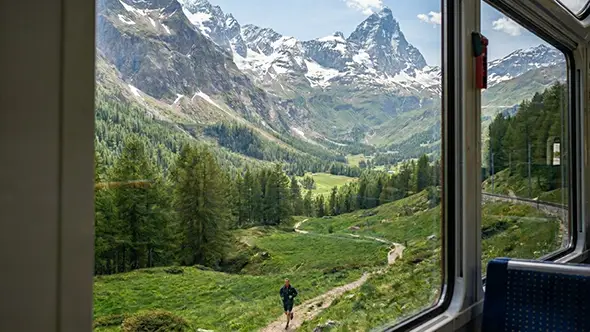
What makes it genuinely interesting for a guest who is not competing: the Matterhorn Gotthard Bahn runs a special "moving grandstand" train that travels parallel to the race route the entire way. You board in the valley, watch the elite field charge past outside the window, and arrive at altitude in time for the finish. It is one of the more unusual ways to experience the Zermatt mountains — and one of the least crowded.
August 8–9: Zermatt Folklore Festival
Two days in August when the village returns to something older than tourism. Traditional music, local costume, alphorns, and the kind of atmosphere that does not require translation. A quiet counterpoint to the athletic events that surround it.
August 21–23: Matterhorn Ultraks
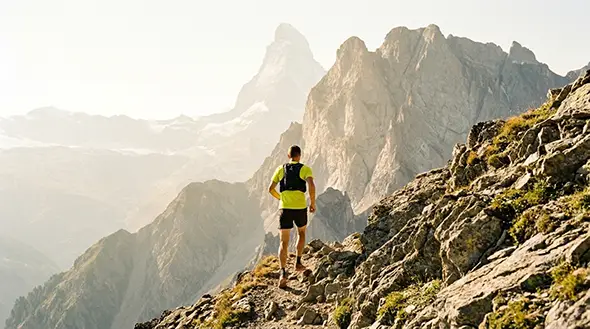
Part of the global Skyrunner World Series since 2019, the Ultraks brings the world’s best mountain runners to Zermatt for three days of racing across terrain that most people would consider extreme hiking. The flagship EXTREME distance covers 27 kilometres with 3,175 metres of elevation gain — through mountain lakes, over glacier, and along rock faces that require both altitude experience and serious speed.
The VERTINIGHT on Friday evening is worth seeing specifically. At 20:45, several hundred runners start a night ascent of Sunnegga — 4.9 kilometres, headlamps moving up the dark mountain in a single column of light. As a spectacle, it is difficult to replicate.
September 11–20: Zermatt Music Festival and Academy
This is Zermatt’s least expected offering, and perhaps its most quietly impressive.
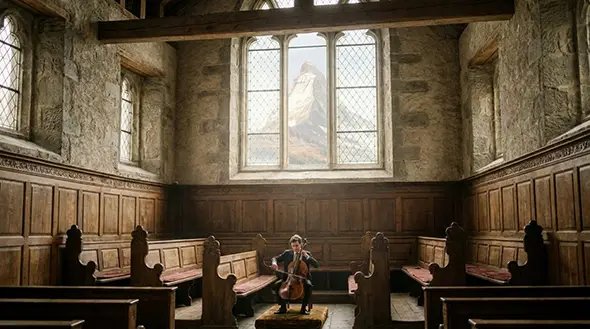
Founded in 2005, the festival is built around a chamber music academy led by the Scharoun Ensemble of the Berlin Philharmonic — one of the most celebrated chamber ensembles in the world. They come to Zermatt each September to work with young musicians from across Europe and perform a full concert programme spanning ten days.
The venues are the village itself:
-
the 13th-century church of St. Mauritius;
-
the Riffelalp chapel;
-
the Matterhorn Museum;
-
private hotel salons.
Ticket prices are intentionally kept low — the maximum is CHF 35 — and a quarter of the programme is free, including the Matterhorn Serenades on the church square.
The effect is something that does not exist in concert halls: musicians of genuine international standing, playing chamber music in a mountain village, surrounded by the kind of silence that cities cannot produce. The contrast between the scale of the Matterhorn outside and the intimacy of a Schubert quartet inside is something that stays in the memory well after the music ends.
What the Mountain Offers Year-Round
Beyond the events calendar, Zermatt in summer has a depth of activity that rewards those who look past the obvious.
-
The Five Lakes Walk — a half-day route above Sunnegga that passes five alpine lakes, each reflecting the Matterhorn in calm conditions. Accessible by funicular from the village centre, no technical experience required. The kind of walk that looks like a postcard and feels like one.
-
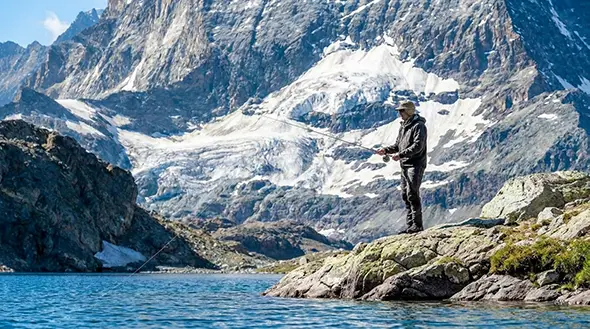
Fly-fishing in the mountain lakes — little-known and genuinely difficult to arrange without local contacts. A guide takes you by lift to one of the high altitude lakes, where freshwater trout live in water cold enough to see to the bottom. The fishing is technical, the setting is unreasonable, and the lunch afterwards at a mountain hut tends to be excellent.
-
Tandem paragliding — a 20-minute flight from altitude over the village, with the Matterhorn as a fixed point on the horizon. Not a novelty activity: the thermal conditions above Zermatt in summer produce flights that experienced pilots describe as among the most technically interesting in the Alps.
-
The Gorner Gorge and Dossen Glacier Garden — a short walk from the village into a dramatic slot canyon carved by glacial meltwater, leading to a glacier garden where ice-age rock formations have been preserved. Less photographed than the main mountain routes, considerably more surprising.
A Note on Logistics
Zermatt has no cars. This is not an inconvenience — it is the reason the village works the way it does. The absence of traffic noise, the electric taxis that move silently through the streets, the ability to walk anywhere in the centre in ten minutes: these are features, not limitations.
-
Arriving by train from Geneva or Zurich takes three to four hours.
-
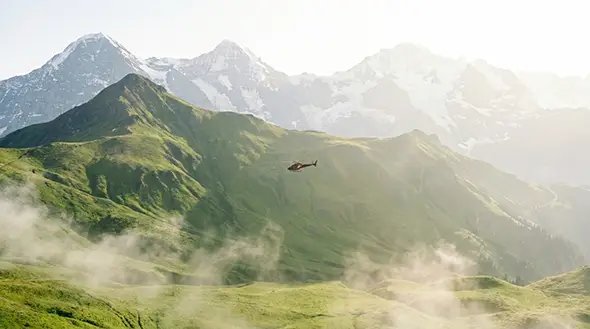
A helicopter transfer from Geneva takes forty minutes and lands in Täsch, a five-minute taxi ride from the village.
-
The mountain railways — Gornergrat, Sunnegga, Matterhorn Glacier Paradise — operate from early morning. Access to everything on this list begins the moment you leave the hotel.
If You Are Considering Zermatt This Summer
The events above fill quickly — accommodation during the Music Festival and the Ultraks weekend in particular. The hotels that offer the right combination of location, service, and privacy do not appear on booking platforms the way mid-range properties do.
We handle the parts that matter:
The right property for the right week
Private guides with genuine mountain credentials
Helicopter logistics and the details that do not appear on any publicly available list.
The conversation starts here:
WhatsApp: +370 693 73577
Email: welcome@enjoy-ski.com