
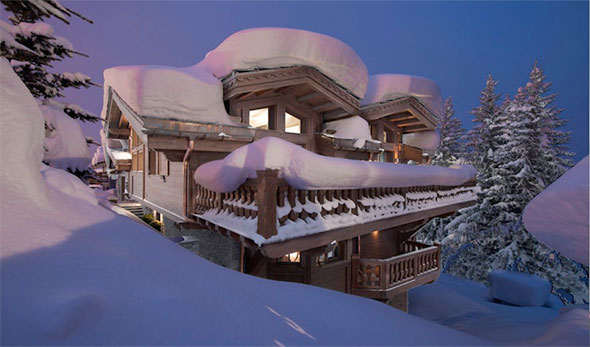
What is the main difference between a premium chalet and the most expensive hotel?
This is a question that everyone who is planning a holiday or a high-level strategic session asks themselves. Why is renting a chalet so much more expensive when a hotel offers more restaurants and extensive infrastructure?
The answer lies in the most valuable currency in the modern world: control and anonymity.
At first glance, you are paying for a beautiful house in the Alps, but in reality you are buying complete freedom from the outside world and a guarantee of the security of your assets. For large capital owners and corporate heads, this is not a luxury, but a necessary investment.
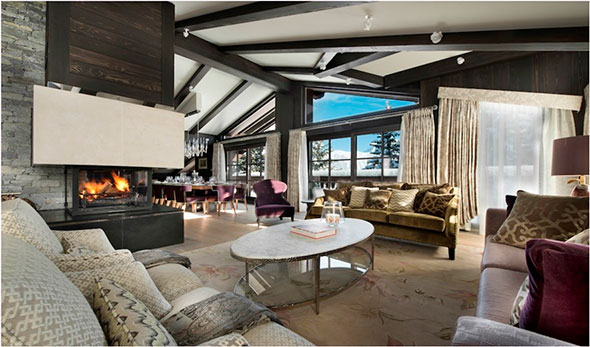
1. Investing in a ‘strategic vacuum’: the price of focused productivity
In a highly competitive environment, time is the most expensive and irreplaceable resource. Every hour of delay in making critical decisions (whether it be a merger or strategic planning) translates into millions in losses. A city office or hotel, with its constant incoming calls, notifications and distractions, is a constant source of noise, where concentration inevitably declines.
Paying for a luxury chalet is a direct investment in a ‘strategic vacuum’. The chalet buys the forced, total concentration of key personnel, isolating them from operational routine and external information noise. It is a tool that accelerates business processes.
Consider a team working on a merger or acquisition (M&A). In an office setting, a process requiring in-depth analysis and confidential negotiations can take two weeks, during which managers are forced to constantly be distracted by current operational tasks and exposed to information risks. Moving to a closed chalet allows the key group to focus on the task 24/7. If this speeds up the decision-making process from 14 days to 48 hours, it is not just a matter of saving on salaries. It is a saving of millions in the cost of financing the deal, minimising the risks of information leakage and, most importantly, gaining a market advantage over competitors. In this logic, the cost of renting a chalet is negligible compared to the benefits of speed.
2. Risk Management: Direct Protection of Trade Secrets and IP
A corporation’s most valuable assets are its intellectual property (IP) and confidential data. Hotel Wi-Fi, public telephone lines, and network infrastructure used by hundreds of guests pose an unacceptable risk to strategic teams. Here, the risk of information leakage or cyberattack is equal to the risk of losing the entire business.
Renting a premium chalet is a purchase of physical and digital sovereignty. The chalet allows the client’s IT security team to completely isolate the perimeter:
- establish dedicated, secure VPN channels,
- check the premises for eavesdropping and ensure that all discussions take place in a legally secure zone.
Imagine that the team is developing unique, groundbreaking technology or preparing a major public announcement. Leaking this information before the official release could destroy the market value of the product. Chalet staff (chef, butler, driver) are hired for the duration of the rental and sign strict non-disclosure agreements (NDAs). This transforms the chalet team from ‘service personnel’ into a ‘trusted circle of confidants,’ eliminating the risks that are inevitable with changing hotel staff.
3. Financial Factor: Transparency of Classification and Financial Control
For large corporations and asset owners, it is extremely important not only to know the amount of expenses, but also to have a transparent classification for budgeting, accounting and internal audit purposes. Working with hotels always leads to financial fragmentation. You receive dozens of bills: for rooms, for conference room rental, for F&B (Food & Beverage) with markups, for individual SPA services.
Renting a premium chalet is a purchase of financial simplicity. The price is formalised as a single contract for the provision of a temporary, fully equipped workspace (including accommodation, meals, security and logistics) for a specific strategic task. This allows you to escape the chaos of operating expenses.
Instead of collecting and reconciling dozens of disparate receipts, the finance department receives a single, predictable, approved budget. This allows the expense to be classified as an investment in a strategic project or initiative, rather than as general entertainment or travel expenses. This level of accounting accuracy is critical for internal reporting and demonstrating the ROI (return on investment) of an off-site session, which is impossible to achieve when working with a complex, multi-level hotel structure.
4. The Price of Force Majeure Immunity: Business Continuity Guarantee
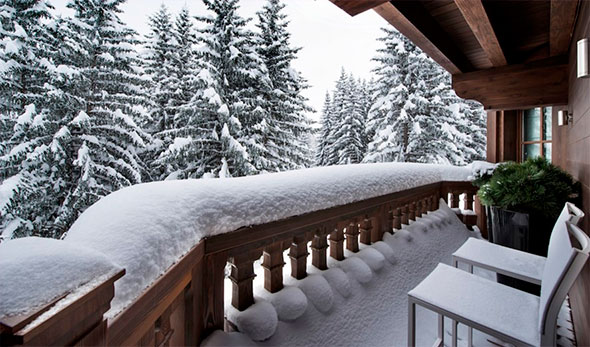
In a luxury hotel, you are always dependent on utility services, public logistics, and the city’s overall infrastructure. In the event of snowfall, power outages or local strikes, your schedule and safety become hostage to external circumstances.
A premium chalet is a purchase of complete autonomy and logistical sovereignty. The rental rate includes engineering and logistical reserves aimed at ensuring the continuity of critical operations.
Most luxury chalets are equipped with double technical reserves: powerful autonomous generators, independent water purification systems, and large reserves of fuel and provisions. This ensures that even in the event of a complete power outage in the region, a strategic session or important negotiations can continue without interruption. Unlike hotel staff, the personnel often live on the chalet grounds, eliminating the risk that they will be unable to get to work due to transport disruption, thus ensuring uninterrupted service regardless of the weather.
5. The Economics of ‘Hidden Fees’: The Projected Cost of All-Inclusive Luxury
The external cost of a VIP suite in a hotel always seems lower than renting an entire chalet. However, the final hotel bill, filled with hidden surcharges and commissions, often leads to significant budget overruns and financial control difficulties.
A premium chalet sells financial predictability. The rental rate includes a full All-Inclusive High-End package, which covers almost everything a guest with exclusive status needs.
In a hotel, the mark-up on premium drinks, wines, room service or additional staff hours can reach 300-500%. In a chalet, however, the cost of a 24/7 personal chef, premium alcohol, drivers and shuttles is already included in a fixed contract. A financial analyst calculating the total actual cost of the stay will find that the absence of ‘hidden’ or uncontrolled markups makes a week in a chalet more cost-effective and predictable than chaotic final bills for ten VIP rooms and additional hotel services.
6. Non-obvious Team Building: Removing Hierarchy and Creating a Culture of Trust
Traditional corporate team building often feels like a formality. Decision-making teams need more than just a joint event; they need to build trust quickly and deeply. A hotel cannot provide this, as it maintains a formal distance (separate rooms, meetings in conference rooms).
A chalet creates an atmosphere of family and equality, which is a powerful management tool. Corporate heads and top managers living together in a single, private space artificially removes the corporate hierarchy.
When working on a complex crisis situation or developing a breakthrough strategy, maximum trust between leaders is required. A shared living room with a fireplace, where the team discusses the details of the strategy over dinner prepared by a personal chef (instead of a formal negotiating table), accelerates team building. This is an investment in ‘speed of communication’ and ‘internal transparency,’ where a decision made over a cup of coffee can be more valuable than hours in a meeting room. The payoff is the creation of an environment where ‘professional masks’ are removed.
Conclusion: Chalets as a Tool for High-Level Decision Making
We see that choosing a chalet over a hotel is not an emotional decision, but a strategic one that makes financial sense.
The actual cost of renting pales in comparison to the cost of inaction or the cost of error. If information noise delays a critical decision by a week, or a leak of commercial secrets jeopardises a deal, the losses will exceed the rental rate tenfold.
Imagine this scenario: six key executives rent a chalet for a week to immerse themselves in strategic planning and approve a major deal that will determine the fate of their company. Thanks to the ‘Strategic Vacuum’ created, they are not just relaxing — they are reaching consensus and finalising all the work in four focused days, freeing up the rest of their time. The chalet guarantees complete data protection from cyber threats, which a hotel cannot provide. In this scenario, the chalet is not a place of rest, but a highly efficient, NDA-protected decision-making centre that ensures that a multi-million-pound initiative is closed quickly, securely and autonomously.
Complete anonymity and absolute control are what define the modern premium class. Renting a chalet is a necessary investment that eliminates all risks and guarantees to accelerate your path to success.


