
Enjoy Ski · Wellness Capsule
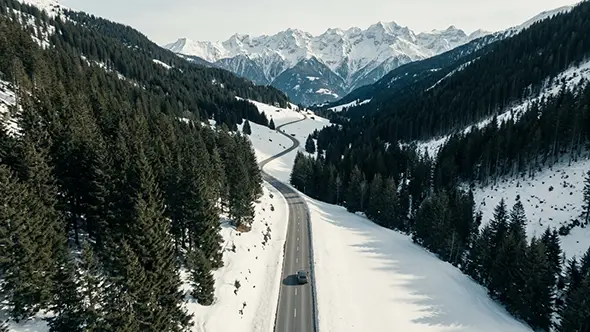
Once a Swiss check-up takes ninety minutes instead of a week, the planning problem changes completely. You are no longer choosing a retreat. You are choosing what to do with the six days on either side of an appointment you cannot move.
This is the part of the subject nobody writes about, presumably because it is logistics rather than aspiration. It is also the part that decides whether the week is any good.
Two things make it tractable. The clinics cluster in two cities. And Switzerland, whatever else it is, has the most reliable ground transport in Europe.
The two clusters
Geneva, or Zurich
Almost every appointment you might book sits in one of these two orbits, and each opens onto an entirely different set of mountains. Choose the cluster first; the resort follows from it.
The Geneva orbit
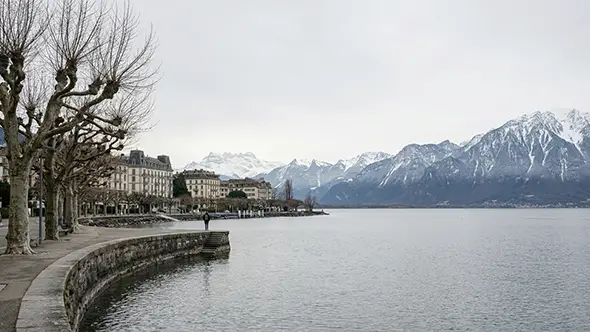
Revoscan is in Geneva. Clinique La Prairie has been on the lake at Montreux since 1931, an hour further along the water.
- Gstaad — roughly an hour and a quarter from Montreux by fast train, and one of the loveliest rail journeys in the country
- Verbier — about two hours by road from Geneva, longer if the weather is doing something
- Crans-Montana — Valais, a sunny terrace of a resort with a long golf season
- Over the French border, Chamonix and Megève, both close to the airport
The Zurich orbit
Aeon and Ahead Health operate here, 360Prevent in Zurich and Bern. Huus Quell is a little over an hour out in Appenzell by road; Chenot Palace sits at Weggis on Lake Lucerne.
- Klosters — under two and a half hours from the airport by train, and the quietest of the serious resorts
- Davos — around two and three quarter hours from the city centre, via Landquart
- St. Moritz — further, and the only one on either list that is a destination in its own right
- Lenzerheide and the Grisons generally, if what you want is space
All of those times are for good conditions. Add to them in winter, and add to them again if you are moving a family with luggage. As a rule we assume a transfer takes a third longer than the timetable says, and we are rarely wrong.
Sequencing
Clinic First, Almost Always
The instinct is to save the appointment for the end, on the theory that you will arrive rested. Resist it, for three reasons.
- Reports take five to seven days. Start the clock on day two and the consultation lands while you are still in Europe, possibly still in the mountains, and certainly while you can still ask a question in the same time zone. Start it on day six and you are reading it at home, jet-lagged, on a Tuesday
- A pending appointment colours the days before it. A week in the mountains with a scan hanging over Friday is a different week from one where it is already behind you. People underestimate this consistently
- Altitude and hard days on your legs are variables you can simply remove. Not because they would invalidate anything — that is a question for the clinic, not for us — but because it is one fewer thing to wonder about afterwards
The one exception
Do not scan on your arrival morning. Give the flight a night to wear off, spend a day in the city, and go in on day two. More on what the appointment involves →
Where to sleep
The Argument for a Kitchen
Here is the uncomfortable thing about the residential model. Strip away the consultations and the treatments, and a large part of what makes a seven-night programme work is that somebody else decides what you eat for seven days. That is the mechanism. Everything else is support for it.
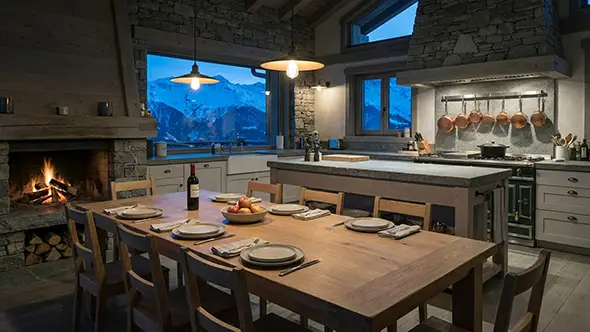
Which means it can be approximated. A chalet with a kitchen and a cook gives you the same control over meals, without the institutional part — and with the considerable advantage that your family can be there and can eat something else.
- For a household, a house that takes three generations works differently from a clinic room, and for most people better
- For two rather than ten, something smaller in the middle of a village tends to suit
It is not a substitute for a medical programme and we would not pretend otherwise. But if what you actually wanted was a week of good food, early nights, long walks and no decisions, a chalet does that at least as well — and you can ski.
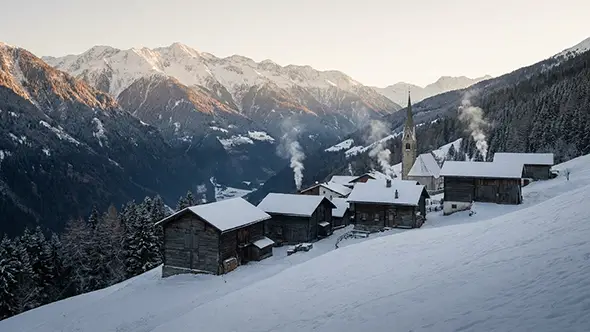
Two shapes
How the Week Tends to Run
The measured week · Geneva
- Sunday — land, hotel on the lake
- Monday — the city. Bloods taken at the hotel in the afternoon
- Tuesday morning — the clinic. Preliminary read the same day
- Tuesday afternoon — a car to Gstaad or Verbier
- Wednesday to Saturday — four days in the mountains
- Saturday — the consultation arrives by video, from a terrace, which is a better place to hear most things than an office
The recovery week · Zurich
- Sunday — land, straight out to Appenzell by car
- Monday and Tuesday — the chamber circuit. Hill country rather than mountains, and its own leg of the trip
- Wednesday — back through Zurich and on to Klosters or Davos
- Thursday to Sunday — four days at altitude
- No reports, no clock, nothing to wait for
Neither is a package and neither is fixed. They are the two shapes the week naturally falls into, and knowing which one you are building saves a great deal of circling.
What we do, plainly
We are an Alpine travel agency, not a clinic and not a medical intermediary. We do not book scans, we do not hold your results, and we do not have an opinion on whether you should have one — that belongs to you and your doctor.
What we do is everything around the appointment: the city hotel, the chalet or the mountain property, the driver who is outside the clinic when you come out, and a week arranged so that the fixed point in it does not wreck the rest. Fifteen years of doing exactly this in the Alps, minus the medical part.
The date is the fixed point
Everything else, we can move
Send us the appointment date and the city, and we will come back with two or three ways the week could run — both shapes above, costed and with real availability.
Browse Swiss hotels and chalets →
WhatsApp: +370 693 73577
Email: welcome@enjoy-ski.com
Part of Wellness Capsule — a short series on what Swiss health travel has become, and how to build a week that survives contact with it.