
Selecting a European ski resort is an endeavor where no detail is too small. When planning European ski holidays, expectations are inherently high. Whether you are seeking a secluded ski-in/ski-out chalet, safe and gentle slopes for a family’s first trip, or the ultimate freeride terrain — every nuance matters to ensure the getaway aligns perfectly with your rhythm.
Once flawless service, heated terraces, and Michelin-starred dining at 3,000 meters are taken as a given, the subtle distinctions in atmosphere and logistics take center stage. The French and Swiss Alps offer fundamentally different experiences; discovering your ideal match among the top ski resorts in Europe means flawlessly capturing the right mood.
This guide covers
6
resorts
600
km of pistes
2
countries
Making the right choice requires looking beyond the glossy facades. A resort’s true identity is anchored in the topography of its slopes, the exclusivity of its hotel portfolio, and the caliber of its après-ski. From the aristocratic charm of Megève and the historic legacy of St. Moritz to the sporting intensity of Val d’Isère, each major Alpine center demands a detailed, objective breakdown of its infrastructure.
While aesthetics and social scenes remain a matter of personal taste, the French Alps set the undisputed benchmark for the sheer scale of the skiing itself. Their interconnected domains offer a logistical mastery that allows you to travel across valleys without ever unclipping your bindings. Exploring this geography naturally begins with the territory uniting Courchevel, Méribel, and Val Thorens — a region whose seamless connectivity has become the gold standard for the entire ski industry.
More guides
Trois Vallées: The World’s Largest Ski Area
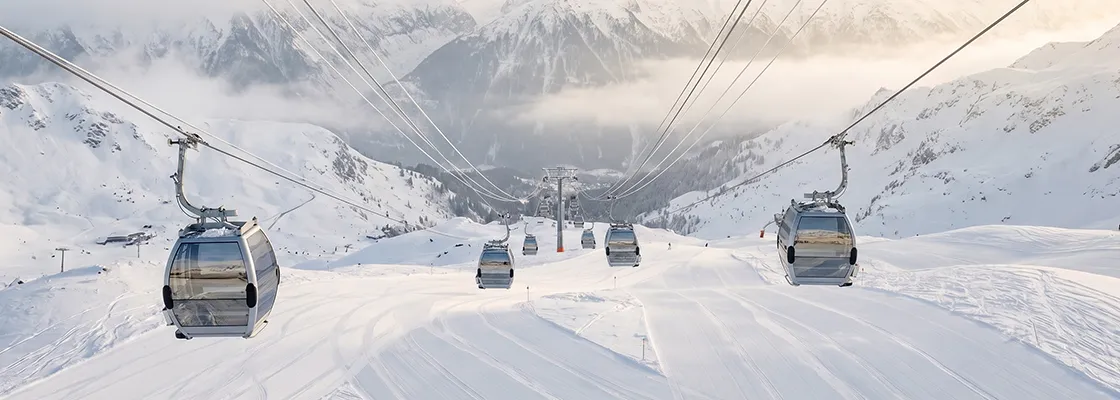
There is a number that defines a region’s status long before you evaluate the service level of its hotels. Six hundred. Six hundred kilometres of interconnected pistes, three distinct valleys, and one ski pass. Les Trois Vallées is unequivocally the largest linked ski area on the planet — the standard against which every other Alpine destination is quietly measured.
To truly appreciate the modern luxury of the Three Valleys, one must understand the scale of its transformation. Today, Michelin-starred dinners are served here and top-tier brands sell limited-edition collections steps from the slopes. Eighty years ago, these same mountains were the exclusive domain of high-altitude shepherds. The vision to unite three gorges into a colossal ski empire was not born in a marketing boardroom — it was the architectural dream of French urban planner Laurent Chappis, who designed the interconnected network before the Second World War. The journey from the area’s first open-air sleds to the construction of Val Thorens at an altitude once deemed uninhabitable is a story of engineering triumph.
A Brief History
| 1938 | Skiing begins in the Allues valley — a 19-seat open-air sled, the area’s first lift |
| 1946 | Courchevel opens on what had been shepherds’ pastures for centuries |
| 1955 | Méribel Alpina founded to formally link the slopes between valleys |
| 1971 | Val Thorens opens — built at an altitude many doubted was livable |
| Today | 183 lifts, 600 km of linked pistes, one pass |
What truly distinguishes Les Trois Vallées cannot be measured by history or statistics alone. Its uniqueness lies in logistics — in how you physically move through this enormous space. This is the only place in the world where you can shift between entirely different resort identities without ever unclipping your skis.
One place to stay – access to the ski areas of three resorts
Courchevel
First runs past shuttered Chanel and Hermès
Méribel
Gourmet lunch in a pine-shaded chalet
Val Thorens
Black runs close out the day at altitude
No shuttles. No transfers. Skis never unclipped.
Despite sharing a single circulatory system of 183 lifts, each valley retains a radically distinct aesthetic. Your choice of base within Les Trois Vallées determines not just your morning runs, but the atmosphere you return to after skiing. Courchevel is the capital of uncompromising glamour. Méribel is the natural, family-friendly heart. Val Thorens trades surface polish for sheer altitude and absolute snow reliability.
| Courchevel | Méribel | Val Thorens | |
|---|---|---|---|
| Founded | 1946 | 1938 | 1971 |
| Altitude | 1,850 m | 1,450 m | 2,300 m |
| Defined by | Boutiques, Michelin stars | Timber chalets, village charm | Altitude, reliable snow |
| Best for | Status, gastronomy | Families, central base | Confident skiers |
The key to this entire infrastructure is the single ski pass. It does more than erase the borders between resorts — it gives you unprecedented flexibility based on conditions. If fog settles over Méribel’s forested zones, you simply ascend to the sunlit glaciers of Val Thorens.
Quick Facts
- 📍 Location: France, Savoie Alps
- ⛷ Ski area: 600 km of linked pistes
- 🏔 Altitude: Up to 3,230 m
- 🎿 Access: One ski pass, three resorts
- 🏆 Status: World’s largest linked ski area
Ski Pass — Practical Info
| 1-day adult | €75–90 |
| 6-day adult | €420–460 |
| ❄ Courchevel snow | Dec – Apr |
| ❄ Méribel snow | Dec – Apr |
| ❄ Val Thorens snow | Nov – May |
Prices vary by season — confirm when booking
Courchevel — The Peak of Alpine Luxury
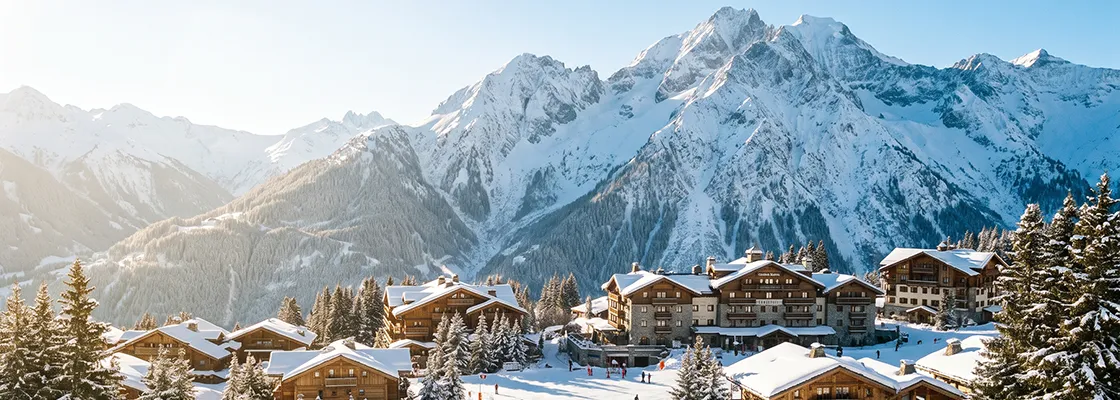
Atmosphere: Courchevel 1850 is the undisputed capital of Alpine luxury. Heated pavements, Chanel and Hermès boutiques steps from the slopes, and a concentration of Michelin-starred restaurants that rivals most European capitals. This is where you come not just to ski, but to be seen — and to eat extraordinarily well at altitude.
Best for: The resort works beautifully for families. The lower villages of Moriond (1650) and Le Praz (1550) offer a quieter, more relaxed atmosphere with direct access to the same phenomenal ski area. Beginners will find wide, perfectly groomed blue runs and dedicated novice zones (ZEN areas) right by the hotels.
Après-ski & Gastronomy: After the lifts close, the action moves to the terrace of Le Montgomerie or inside La Grange — the ultimate spots for a glass of vin chaud and people-watching. For an evening triumph, Le Kintessence (2 Michelin stars) and the legendary Le 1947 at Cheval Blanc are the absolute benchmarks.
Quick Facts
- 📍 Location: France, Savoie Alps
- ⛷ Ski Area: Trois Vallées (600 km)
- 🏔 Altitude: 1,850 m (village) / 3,230 m (peak)
- 👨👩👧 Best for: Families, luxury travelers
- ❄ Snow-sure: Yes
- 🍽 Michelin: 7 starred restaurants
Where to Stay in Courchevel
Palace & Ultimate Luxury

Méribel — The Heart of the Three Valleys
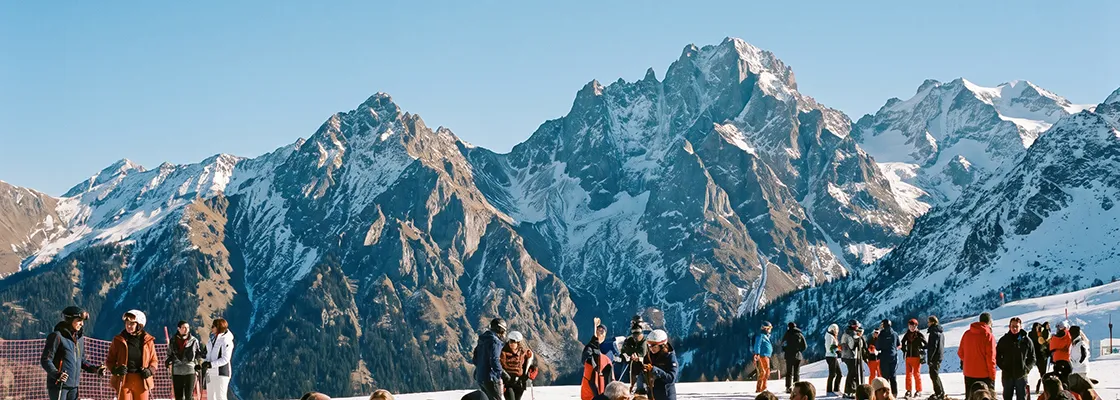
Atmosphere: While Courchevel dazzles with sheer glamour, Méribel captivates with authentic charm. Strict building regulations ensure no concrete towers pierce the skyline—only natural timber, local stone, and traditional pitched roofs are permitted. The result is one of the most authentically Alpine resorts in the French Alps, a timeless favorite among a respectable international crowd.
Best for: Positioned at the very geographic center of Les Trois Vallées, Méribel serves as the ultimate strategic base for exploring the entire domain. The lower, forested slopes provide a sheltered haven for beginners and families, offering long, confidence-building runs protected from the elements.
Après-ski & Gastronomy: As the lifts close, the Rond Point des Pistes transforms into the resort’s social epicenter. The famed La Folie Douce brings pulsating electronic beats and mountain-top dancing, while down in the village, Le Poste de Secours remains the undisputed classic for an elegant après-ski evening.
Quick Facts
- 📍 Location: France, Savoie Alps
- ⛷ Ski Area: Centre of Trois Vallées (600 km)
- 🏔 Altitude: 1,450–1,750 m (village)
- 👨👩👧 Best for: Families, beginners, British crowd
- ❄ Snow-sure: Good (forest zone protects from wind)
Where to Stay in Méribel
Premium 5-Star
Val Thorens — Europe’s Highest Ski Resort
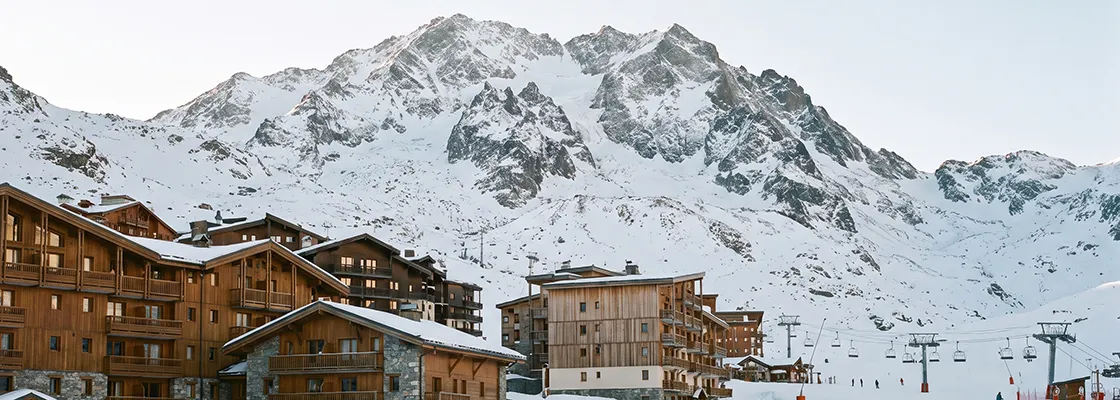
Atmosphere: Situated at 2,300 meters, Val Thorens literally sits above the clouds. As the highest ski resort in Europe, its absolute obsession is snow. While the architecture is more functional than traditional, visitors do not come here for the wooden chalets—they come for the unparalleled slope conditions and breathtaking alpine panoramas.
Best for: This is the ultimate destination for those who prioritize skiing above all else. The high-altitude terrain and wide-open, wind-swept bowls make it a paradise for confident skiers and powder seekers. With its glacier access, it is the most snow-sure resort in the Alps, operating reliably from November through May.
Après-ski & Gastronomy: The local La Folie Douce is the largest in the Alps, featuring a massive concert stage right on the snow. For a more refined and relaxed evening, the luxury crowd gravitates toward the panoramic rooftop of the Koh-I-Nor or the elegant terrace at Le Fitz Roy.
Quick Facts
- 📍 Location: France, Savoie Alps
- ⛷ Ski Area: Trois Vallées (600 km)
- 🏔 Altitude: 2,300 m (village)
- 👨👩👧 Best for: Advanced skiers, snow-seekers
- ❄ Snow-sure: Best in the Alps (Nov–May)
Where to Stay in Val Thorens
Luxury & Altitude
Val d’Isère — Legendary Slopes, Guaranteed Snow
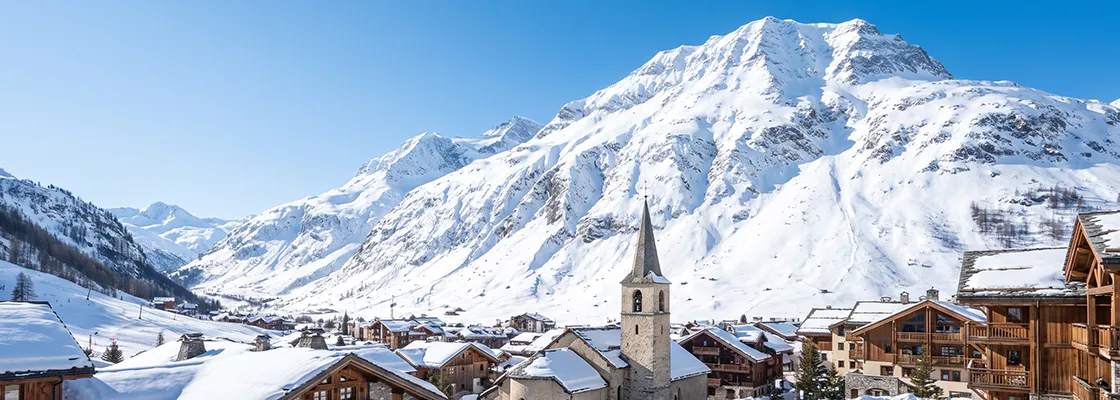
Atmosphere: Val d’Isère possesses a true sporting soul. This is where downhill legends were forged during the 1992 Winter Olympics, and it remains the ultimate destination for those seeking the real Alpine experience: steep, challenging terrain, deep powder, and one of Europe’s most vibrant après-ski scenes.
Best for: The combined Espace Killy area, shared with neighboring Tignes, offers 300 kilometers of runs specifically skewed toward intermediate and advanced skiers. Exceptional glacier skiing ensures one of the longest seasons in the Alps, running reliably from November through May.
Après-ski & Gastronomy: La Folie Douce at the top of the La Daille gondola hosts Europe’s most famous mountain party—complete with live bands, DJs, and crowds dancing in ski boots by 3 PM. Down in the village, La Bananas has stood as the après-ski institution for decades.
Quick Facts
- 📍 Location: France, Tarentaise Valley
- ⛷ Ski Area: Espace Killy (300 km)
- 🏔 Altitude: 1,850 m (village) / 3,456 m (peak)
- 👨👩👧 Best for: Experienced skiers, powder hunters
- ❄ Snow-sure: Exceptional (glaciers)
- 🍽 Michelin: Starred dining in resort
Where to Stay in Val d’Isère
Luxury & Sport
Megève — Old Money, Timeless Charm
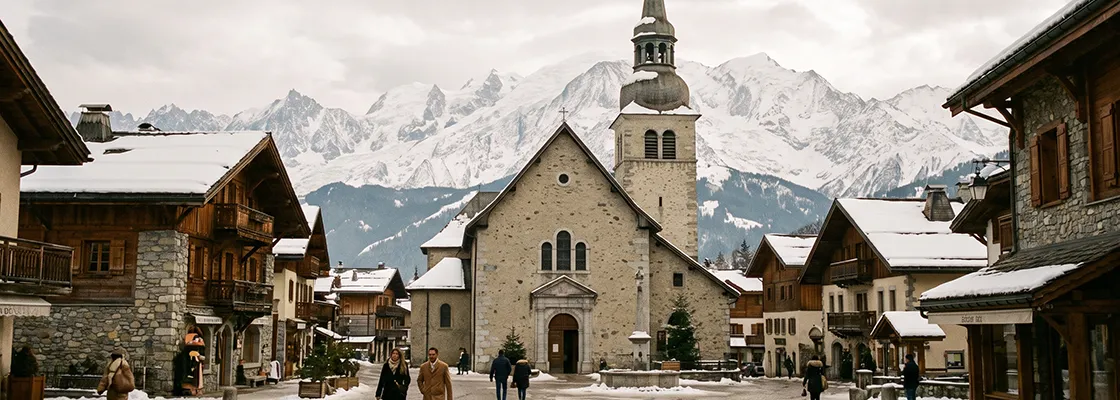
Atmosphere: Megève was invented in the 1920s by the Rothschild family as a French alternative to St. Moritz. A century later, it remains exactly what it was designed to be: elegant, understated, and utterly French. Horse-drawn carriages navigate cobblestone streets, Michelin-starred restaurants await around every corner, and the clientele is of a caliber that doesn’t need to announce itself.
Best for: Megève is an exceptional destination for families and non-skiers. The village is highly pedestrian-friendly, offering world-class boutiques and one of the finest ski schools in France. The skiing itself suits intermediates perfectly, while dedicated powder hunters may want to look elsewhere.
Après-ski & Gastronomy: The Five Flies bar at the Lodge Park hotel serves as Megève’s elegant après-ski centerpiece. For serious food lovers, the iconic Les Enfants Terribles brasserie and the exquisite restaurants at Les Fermes de Marie are absolute culinary highlights.
Quick Facts
- 📍 Location: France, Haute-Savoie
- ⛷ Ski Area: Evasion Mont-Blanc (445 km)
- 🏔 Altitude: 1,050–2,350 m
- 👨👩👧 Best for: Families, luxury seekers, non-skiers
- ❄ Snow-sure: Moderate (lower altitude)
Where to Stay in Megève
Classic Luxury
St. Moritz — The Original Alpine Resort
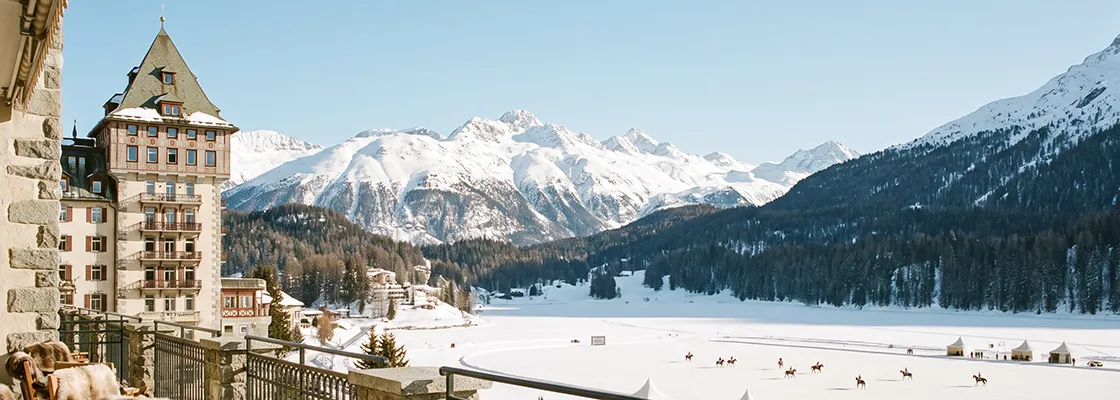
Atmosphere: St. Moritz essentially invented Alpine tourism. The resort has been hosting Europe’s elite since 1864, and 160 years later, its ambition remains entirely unchanged. The frozen lake hosts polo and horse racing. The Kulm Hotel maintains a toboggan run dating back to 1884, and Badrutt’s Palace has welcomed royalty since 1896. This is a resort that simply does not need to try.
Best for: The skiing here is serious business, featuring challenging terrain, highly reliable Swiss snow, and impeccably maintained pistes. But St. Moritz is equally designed for those who have no intention of skiing at all. For these guests, the high-end shopping on Via Serlas and the exclusive Corviglia Club offer a flawless itinerary.
Après-ski & Gastronomy: The social scene here is unrivaled. During the day, the elegant crowd gathers for champagne at Hauser’s café, while King’s Social House remains the absolute landmark for sophisticated evening après-ski.
Quick Facts
- 📍 Location: Switzerland, Engadin Valley
- ⛷ Ski Area: Engadin St. Moritz (350 km)
- 🏔 Altitude: 1,856 m (village) / 3,303 m (peak)
- 👨👩👧 Best for: Luxury travelers, jet-set crowd, non-skiers
- ❄ Snow-sure: Excellent (320 days of sunshine a year)
FAQ
What is the best ski resort in Europe for a luxury holiday?
Which European ski resort has the most reliable snow?
What is the best time of year to ski in the French Alps?
Are the top European ski resorts suitable for families with young children?
What is the difference between Courchevel, Méribel, and Val Thorens — and which should I choose?
Why choose the European Alps over Aspen or Vail?
Do I need to speak French to ski in the French Alps?
Can I combine two or more resorts in one ski holiday?
Your Bespoke Journey
Ready to plan your trip?
We do not offer standard itineraries. Every journey is individually crafted: from booking ski-in/ski-out chalets to securing tables at exclusive restaurants and managing logistics of any complexity. Tell us your expectations, and we will take care of every detail.